

Every workplace has them.
The coworker whose attitude drains the room.
The colleague who constantly disagrees with you.
The personality that simply clashes with yours no matter how hard you try.
Learning how to work with people you don’t like is one of the most important professional skills you can develop. Not every workplace conflict comes from bad intentions, but unresolved tension can reduce productivity, increase stress, and damage teamwork.
The reality is simple: you cannot control who you work with. But you can control how you respond.
Why Workplace Personality Conflicts Happen
Many workplace disagreements are not about competence or effort. They are often caused by differences in:
- Communication styles
- Personality traits
- Work pace
- Decision-making approaches
- Expectations about collaboration
For example, someone who values speed may clash with someone who prioritizes accuracy. A direct communicator may frustrate someone who prefers diplomacy.
When these differences go unrecognized, they easily turn into workplace tension or resentment.
Why Avoiding Difficult Coworkers Doesn’t Work
When people dislike a coworker, their instinct is usually to avoid them. Unfortunately, avoidance rarely solves the problem.
Avoidance often leads to:
- Miscommunication
- Increased frustration
- Project delays
- Passive-aggressive behavior
- Workplace stress
Instead of improving the situation, avoidance can quietly make collaboration more difficult.
Learning how to interact professionally—even with people you don’t like—helps protect your productivity and reputation.
Separate the Person from the Work
One of the most effective ways to handle difficult coworkers is to focus on the task instead of the personality.
Instead of thinking about how someone behaves, shift your attention to:
- Project goals
- Shared responsibilities
- Clear communication
- Problem solving
When conversations remain task-focused, emotional friction decreases significantly.
Communicate Clearly and Professionally
Workplace conflict often grows from unclear communication.
When working with someone you dislike, clarity becomes even more important. Focus on communication that is:
- Direct
- Respectful
- Specific
- Neutral in tone
Avoid sarcasm, assumptions, or emotional reactions. Keeping communication professional helps prevent unnecessary escalation.
Set Healthy Boundaries
You do not need to become friends with every coworker to collaborate effectively.
Healthy boundaries protect your emotional energy while maintaining professionalism. Boundaries can include:
- Keeping conversations work-related
- Limiting unnecessary interactions
- Staying neutral during disagreements
- Avoiding personal discussions that trigger tension
Boundaries are not about creating distance—they are about protecting professionalism.
Focus on Long-Term Reputation
In difficult situations, it’s easy to become reactive. But workplace behavior shapes how others see you over time.
Professionals who handle difficult coworkers with calm communication and emotional control develop a reputation for leadership and maturity.
Even when others behave poorly, maintaining professionalism strengthens your credibility.
Not Every Conflict Needs Resolution
It’s important to remember that not every personality conflict must be solved.
Sometimes the goal is simply functional cooperation—working together effectively even if personal chemistry is absent.
Respect, clarity, and consistency often matter far more than friendship.
Final Thoughts
Working with people you don’t like is an unavoidable part of professional life. Every workplace brings together different personalities, communication styles, and expectations.
The key is learning how to collaborate without letting personal tension control your work experience.
By focusing on professionalism, communication, and emotional boundaries, you can maintain productivity and protect your peace—even in challenging workplace relationships.
📘 From the book:
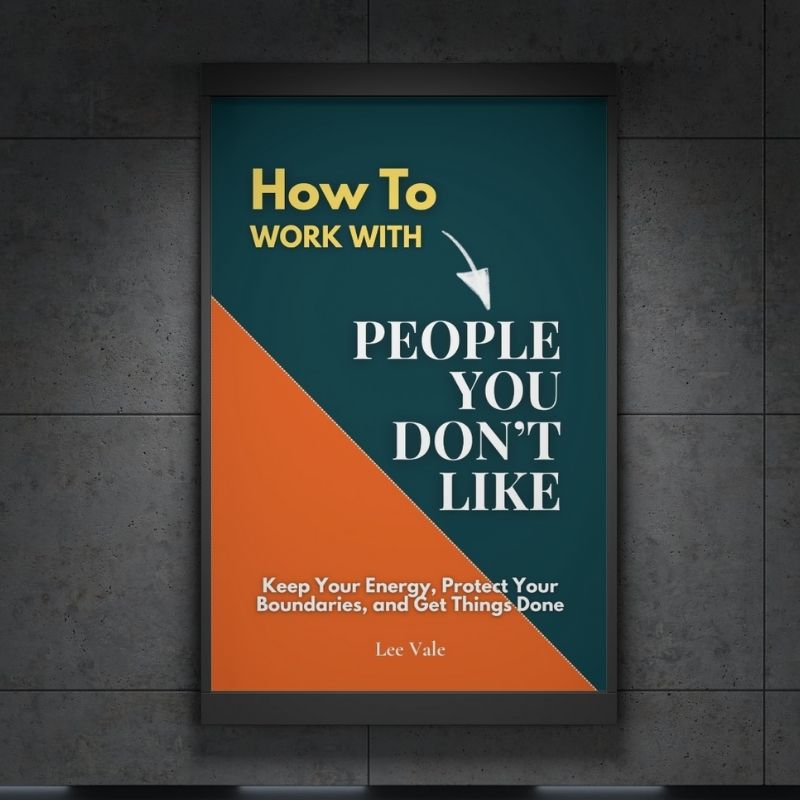
How to Work With People You Don’t Like by Lee Vale
This practical guide explores how to handle difficult coworkers, reduce workplace tension, and maintain professionalism even when personalities clash. Through clear strategies and communication tools, the book helps professionals navigate everyday office conflict with confidence and composure.
Leave a Reply